
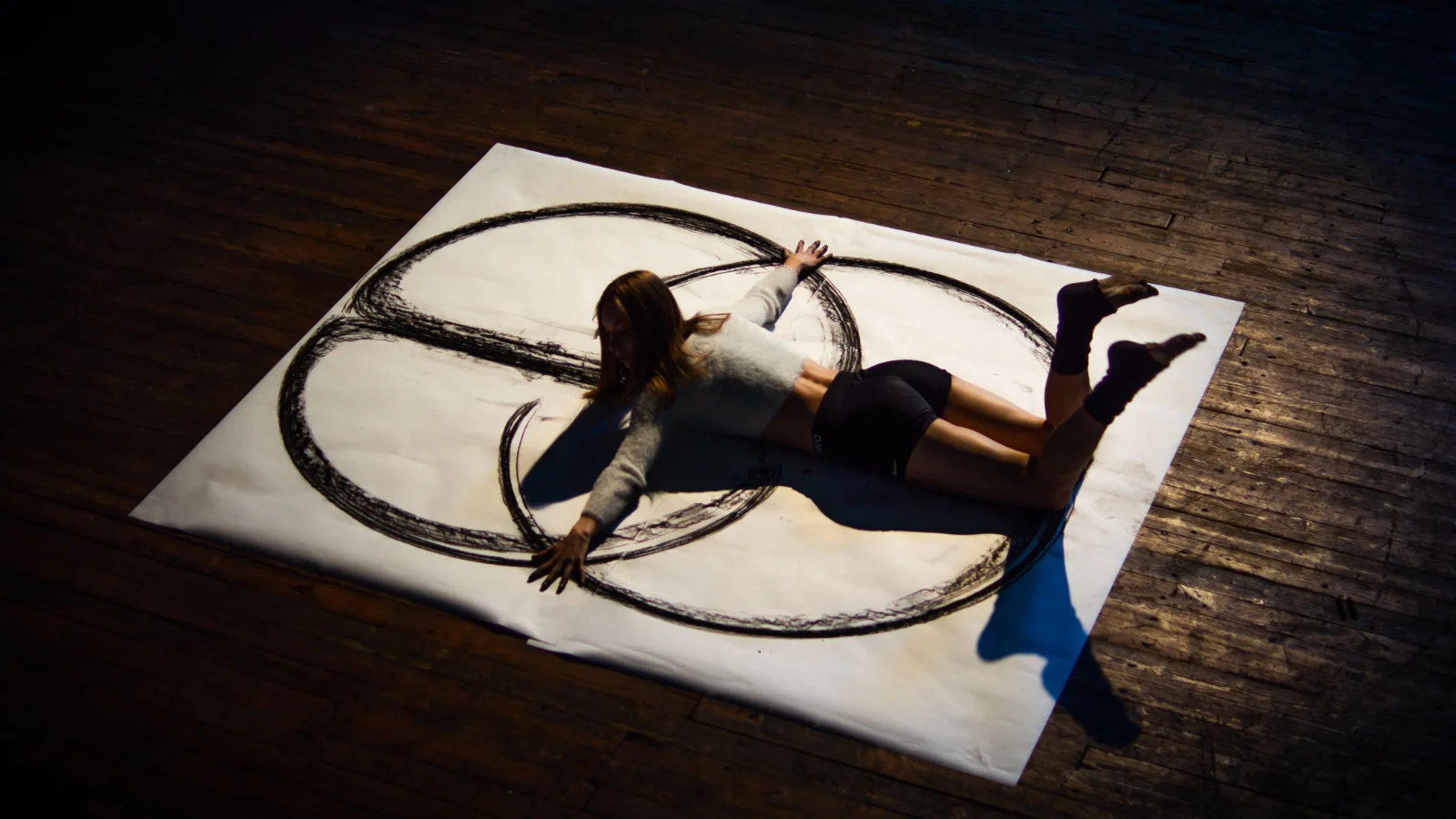
There is something quietly powerful about putting your hands — or mind — to work. A person who sits down to sketch, to write, to shape clay, to build something with code or wood or thread, enters a different relationship with time. Anxiety softens. The noise of undone things recedes. The body and mind arrive at the same address.
This is real. The absorption of making — what psychologists call a flow state — is one of the most consistent, accessible forms of emotional regulation available to us. It requires no prescription, no appointment, no waiting room. It asks only that you begin.
But here’s what almost no one says out loud: drifting through creative work is not the same as building something from it. And the distinction matters far more than we like to admit.
Why making heals — and why it can also stall
When you make something, you exercise agency in one of its purest forms. You decided something would exist, and now it does. Even a small creative act — a journal entry, a finished drawing, a dish made well — reinstates a basic human truth: you can affect the world around you. In periods of helplessness or pain, this matters enormously.
Creative immersion also restores a sense of present-tense living. It is nearly impossible to spiral into regret or anticipatory dread while your attention is genuinely held by something you’re building. The work becomes an anchor — not an escape, but a return.
And yet. Many people spend years inside creative practice without arriving anywhere. They improve, loosely. They produce things. They feel better in the hours of making and then slide back when the work is set down. The practice becomes a holding pattern rather than a path — not because the work isn’t real, but because there is no structure underneath it, no direction it is aimed toward.
Not all effort returns equal
Here is a principle that cuts through a lot of confusion: not all projects, relationships, and activities yield equal results. Some offer disproportionate return on your time and energy. Others consume effort without significant gain.
The term for this is leverage — and recognizing it changes how you approach creative work entirely.
A person who paints daily is building skill and healing something real. A person who paints daily and is developing a body of work aimed at a specific market, audience, or use is doing the same thing — but the second person’s effort compounds in multiple directions at once. The making still anchors. But it also accumulates into something directional. Feedback from the world sharpens taste. Deadlines create structure. Even modest income creates evidence that the work has weight beyond the maker’s own experience of it.
This is not about money being the point. It’s about the difference between effort that floats and effort that has a floor beneath it.
High-leverage creative endeavors — a skill-building project with a real output, a relationship that opens doors and deepens you, an initiative that creates lasting value for others — tend to multiply benefits across multiple areas of life simultaneously. Low-leverage activity consumes the same hours without producing that ripple. Both feel like work. Only one compounds.
What structure actually looks like
Structure doesn’t mean rigidity. It means knowing, at any given moment, what you are working toward.
A small amount of deliberate architecture transforms creative energy from ambient to accumulative:
A defined output. Not “I want to get better at writing” but “I am finishing a series of essays on this subject by the end of the quarter.” The specificity isn’t pressure — it’s a container that makes the work real.
A real audience or use. Work made for others behaves differently in your hands. It asks more of you. What it asks makes you better.
A feedback loop. Income is one form of feedback. So is publication, critique, usage, audience response. What matters is that something comes back. Pure output with no return is a monologue — it cannot correct itself.
A review rhythm. Monthly, quarterly — sit with the work and ask honestly: is this going somewhere? Is the direction still right? Adjust and continue. Direction is not a destination, it is a habit of orientation.
The leverage principle applied to yourself
There is a third dimension that creative practice alone tends not to address: the person doing the work.
You can improve your craft considerably without touching the beliefs, habits, and patterns that govern your relationship to ambition, consistency, and self-worth. And eventually, those unchallenged inner structures become the ceiling.
Structured personal development — working on the self with the same deliberateness you bring to a project — is arguably the highest-leverage investment available. It is not separate from creative and professional growth. It is the foundation of it.
The person who develops their emotional intelligence, who understands their own avoidance patterns, who builds the capacity to tolerate discomfort and receive feedback and begin again after failure — that person keeps expanding what they can do and sustain. Skill compounds on top of skill. Resilience compounds on top of resilience.
This might look like a serious reading practice. A coaching relationship. A journaling method aimed at clarity rather than just expression. A deliberate commitment to understanding what stops you, not just what drives you.
By applying the leverage principle to yourself — by identifying which inner work would unlock the most growth across the most areas — you stop spreading yourself thin across low-impact self-improvement habits and start building the infrastructure of a compounding life.
The full picture
Three layers, working together:
Immerse in making. For the healing, the presence, the joy, and the discipline it builds. Let the work be the daily anchor. Let it be enough on the days when that’s all you have.
Aim the making at something real. A project, a product, a body of work that can reach someone, serve someone, create lasting value. Even modestly. Even slowly. Drift inside a container is still drift — but a container changes everything.
Work on yourself in parallel. Not as a detour from the creative life but as its foundation. The self who shows up to make is the instrument. The higher the leverage of the inner work you do on it, the greater the return on everything built on top.
Not all effort yields equal results. Recognizing that — and then orienting your time toward what multiplies — is how you ensure that the hours spent living, learning, and creating produce the greatest possible effect on your well-being, your work, and your life.