
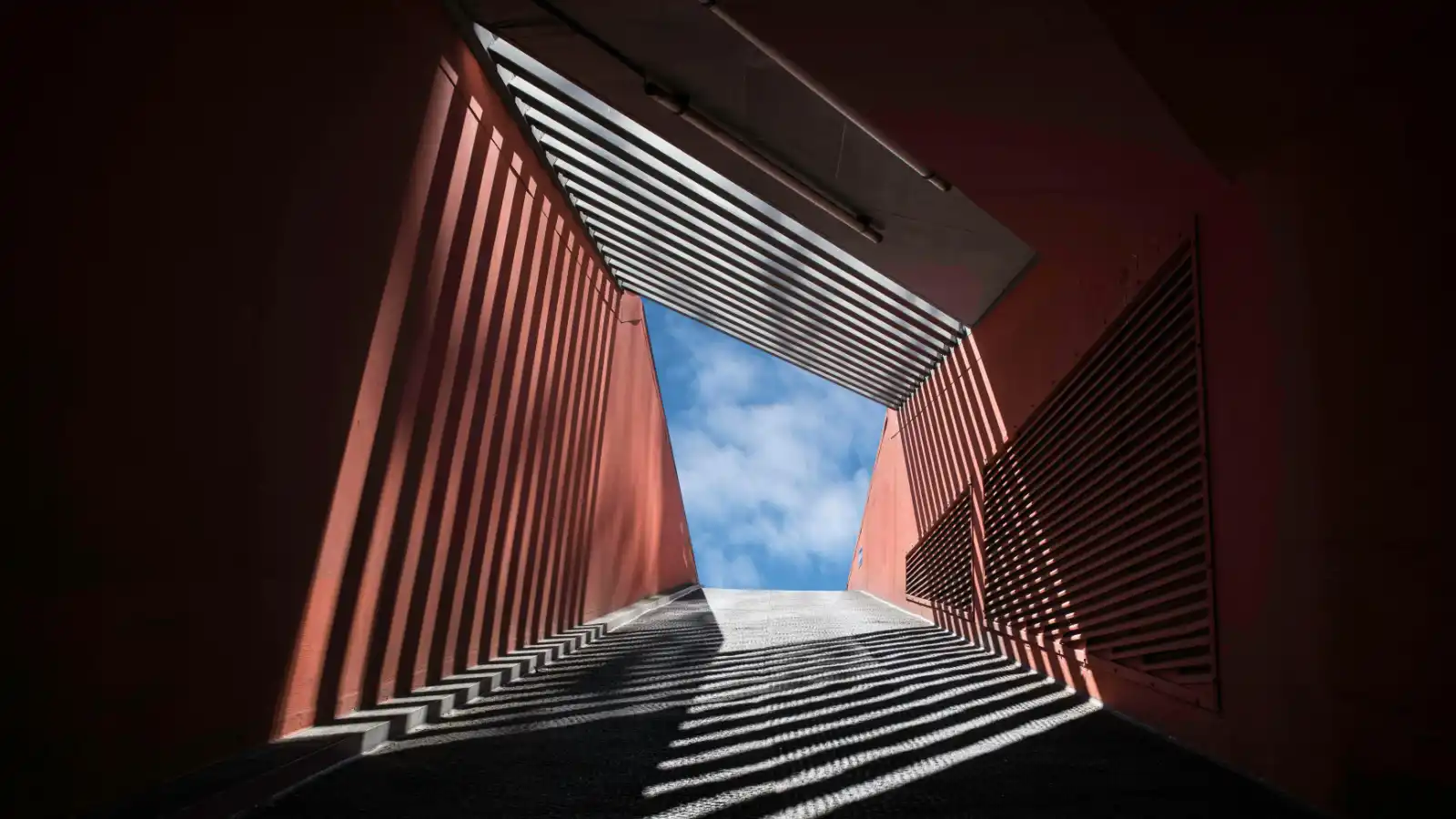
Some problems do not yield to continued attention. Not because they are especially complex, but because proximity itself becomes the limiting factor. The closer one works on them, the less of their structure is visible.
At a certain point, effort no longer produces insight. It only maintains contact.
Stepping back is not withdrawal. It is a change in stance.
A back stance reduces proximity so the problem can be seen as structure rather than pressure. It shifts attention from acting inside the problem to observing the conditions that make it appear the way it does. What changes is not the problem, but the field of perception around it.
Problems exist at different levels
There is a well-known idea often attributed to Einstein: problems cannot be solved at the same level of thinking that created them.
What matters is not the phrasing, but the implication. Some problems are not blocked by scale rather than complexity. They are being viewed at too low a resolution for their actual structure to appear.
To step back is sometimes to change level entirely. What is intractable at one level becomes ordinary at another. The problem does not resolve through effort within the frame; it becomes visible as something else once the frame is no longer fixed.
Time as a silent modifier
Time does not solve problems directly. It changes the conditions under which they are encountered.
Urgency fades. Emotional intensity loses authority. Attention moves elsewhere, and in doing so, the internal model of the problem is quietly reorganized without deliberate intervention.
But time also modifies something less often acknowledged: the observer.
The person who returns is not identical to the person who left. Priorities shift without decision. Assumptions soften without debate. New information accumulates indirectly through unrelated experience. Even when the problem itself has not changed, it is no longer being seen from the same internal configuration.
Problems that resolve without intervention
Some problems do not require solving in the conventional sense.
They are sensitive to continued attention in a way that keeps them artificially active. Once attention is withdrawn long enough, they reorganize, dissolve, or simply cease to present themselves as problems at all.
In these cases, intervention is not what resolves them. Intervention is what maintains their visibility.
What appears as a problem is sometimes only a function of proximity sustained over time.
The discipline of timing
The difficulty is not recognizing that stepping back is possible, but recognizing when it is necessary.
When continued engagement produces no new information, effort ceases to be discovery and becomes maintenance. At that point, stepping back is not avoidance. It is calibration of attention.
The problem is not abandoned. It is held without pressure, allowed to exist without continuous interference.
This is the back stance: awareness without forced interaction.
Returning from distance
On return, the problem is rarely identical.
What once appeared dense may now appear structured. What felt singular may separate into parts. At times, a solution becomes visible. At other times, only a clearer definition of the problem itself emerges.
In both cases, the change is not produced by effort alone, but by altered proximity—and altered perspective.
The problem is not simply revisited. It is encountered from a different position in time.
A related perspective
Some problems do not benefit from distance alone, but from being removed entirely from repeated cycles of attention. Certain patterns return so predictably that they are not best understood as things to be repeatedly solved, but as things to be resolved once and then no longer re-entered as active problems.
For a different angle on that idea—how attention itself can be freed by permanent resolution rather than repeated engagement—explore The Freedom of Resolution.
The discipline beneath patience
Stepping back is not inaction. It is controlled disengagement in service of perception.
Some problems are solved by effort. Some by reframing. Some by time alone, without direct intervention.
And some, notably, only remain problems while they are being actively held as such. Once distance is introduced, they lose the conditions that made them appear necessary to solve.
The difference between these cases is often invisible from within the problem itself.