
We live better than kings did a century ago. Clean water from a tap. Food available at any hour. Medicine that works. The accumulated knowledge of human civilisation in a device that fits in a shirt pocket. By almost any historical measure, a person with a regular income today has access to things that would have seemed like science fiction to their grandparents.
And yet the feeling of needing more never quite goes away.
Elon Musk has said that the gap between expectation and reality is where most human unhappiness lives. The expectation is that more things will close the gap. The reality is that they almost never do — partly because the things weren’t necessary to begin with, and partly because the expectation simply adjusts upward.
Steve Jobs stood on a stage in 2007 and described a device that would put the internet in your pocket. Most people alive at the time couldn’t fully imagine what that would mean. Now it’s unremarkable. The extraordinary became the baseline, and the baseline immediately started to feel insufficient.
This article is an attempt at clarity. Not minimalism as a philosophy — clarity as a practical matter. The list of things a person actually needs for a good modern life is short. Most people are already on it and don’t know it.
The noise
Before the list, the noise.
Open any shopping app and within thirty seconds you will have encountered forty objects you didn’t know existed and at least three you briefly believed you needed. This is the environment. It is designed with considerable sophistication to produce exactly that response — the flicker of want, the low price that removes the friction of hesitation, the package that arrives before the feeling has time to fade.
This is also, in a structural sense, how the economy works. Production requires consumption. The system needs you to keep buying, and it has spent decades perfecting the tools to make sure you do. Countdown timers. Limited stock warnings. Algorithms that know what triggered you last time. None of this is accidental, and none of it is on your side.
What gets lost in the noise is the fact that some of it genuinely isn’t noise. People design remarkable things. A well-made object — something considered, functional, beautiful in its honesty — is one of the quiet pleasures of modern life. Taste is revealed in what you choose to own. There is nothing wrong with wanting things, and nothing shallow about caring how they look and feel. The problem is not consumption. The problem is unconscious consumption — buying on reflex rather than judgement.
Television shopping channels were the lamest version of this: a presenter in a studio performing enthusiasm for a cubic zirconia bracelet or a mop with seventeen attachments, a phone number counting down on screen, and somehow it worked for decades. The mechanism was identical to what fills your feed today — manufactured urgency, the illusion of a deal, the suggestion that everyone else is already buying. The channel changed. The trick didn’t. The current version is just better looking and harder to switch off.
The question worth inserting into that moment is simple: do I want this, or was I just shown it? The two feel identical from the inside, which is precisely the point.
Nothing wrong with owning things. Everything wrong with owning things you didn’t actually choose.
Clothes
Clothes come first because they are the most daily of all objects and the category most thoroughly colonised by noise.
You wear clothes before you pick up your phone. They are the first layer of communication between you and every person you encounter. They also represent one of the clearest cases where the market has produced both genuine abundance and genuine confusion simultaneously.
What a person actually needs: clothes that fit well, are made to last, and work across the situations their life contains. That’s a small wardrobe. A few good basics, a jacket for weather, shoes built for duration rather than a season. Functional clothing — technical fabrics, proper layering — has never been better designed or more accessible. The most desirable pieces right now are often the most functional ones. People have started wanting the thing designed to actually do something.
The fast fashion end of the market has made clothing essentially disposable, which sounds like abundance and functions like waste. Buying less and buying better is not a lifestyle statement. It’s just more honest accounting.
A decent home
A good home requires less than the interior design industry would prefer you to believe.
The essentials: furniture that functions well, lighting that doesn’t make everything look bad, a temperature that is comfortable. Beyond that, the returns diminish quickly. A well-made sofa, a table that doesn’t wobble, a chair you can sit in for hours — these are functional decisions before they are aesthetic ones.
Lighting is the single most underrated element of any room. Bad lighting makes good furniture look mediocre. Good lighting makes a modest room feel considered. It costs less than most furniture and has more impact than almost any of it.
The rest is editing. Every object in a home is either earning its place or occupying it. The goal is a space where there is enough room around things to see them clearly. That standard is not difficult to meet — it just requires saying no to a lot of things that seem reasonable at the moment of purchase.
If you have a house with a lawn or a garden, proper tools matter. A decent lawnmower, the right basic kit — things that work reliably and last. The cheap version of most tools is a way of buying the same tool twice.
The phone
When Steve Jobs walked onto a stage in San Francisco in January 2007 and announced that Apple was introducing three things — an iPod, a phone, and an internet communicator — before revealing they were all one device, most people in the room didn’t fully grasp what they were watching. Not a new product category. A collapse of dozens of them. Within a few years the camera industry was in structural decline, the GPS device market had essentially vanished, the music player was a museum piece, and the newspaper was fighting for its life. One object, introduced in one presentation, rewired the material landscape of modern life faster than anything before it. The iPhone didn’t win because it was the first smartphone. It won because it was the first one that felt inevitable — the moment you held it, every phone that came before it seemed like a prototype for this.
This is the one object that genuinely changed everything, and it’s worth being clear about why.
The smartphone absorbed the camera, the map, the alarm clock, the newspaper, the music player, the bank, the address book, the torch, the calendar, the boarding pass, and the video camera. It did all of this adequately enough that most people stopped needing the originals. No object in human history has displaced so many other objects so quickly.
A good one is worth the investment because you use it for everything, every day, for years. The camera quality is the real differentiator now — not the specification number but the actual performance in real conditions, in low light, in motion. That’s where the meaningful gap between a mediocre phone and a great one lives.
The market has split into two distinct ecosystems. On one side, Apple — a closed, tightly integrated world where the hardware, software, and services are designed by the same company to work as a single coherent thing. The experience is seamless in a way that is genuinely difficult to replicate, and once you are inside it — iPhone, Mac, AirPods, Apple Watch, iCloud — the ecosystem pulls you deeper with every device you add. It is also, by design, difficult to leave. Apple users tend to stay Apple users not because they are brand loyal in any simple sense, but because the whole is meaningfully greater than the sum of its parts.
On the other side, Android — an open platform running across hundreds of devices from dozens of manufacturers, offering more choice, more flexibility, and in several cases hardware that matches or exceeds Apple’s on individual specifications. Google’s own Pixel line offers the cleanest Android experience and a camera system that competes seriously at the top end. Samsung brings the widest range and the most ambitious display hardware. The trade-off is a less unified experience — the seams show more, the software varies by manufacturer, the long-term update support has historically been inconsistent, though that is improving.
The honest summary: Apple wins on integration and longevity. Android wins on variety and openness. Neither is objectively better. The question is which set of trade-offs fits how you actually live and work.
The computer
For years, Apple ran a series of advertisements where two men stood in a white void having a conversation. One was a little stiff, dressed for an office he never quite relaxed in. The other was younger, easier, wearing the kind of clothes that suggested he had better things to do than argue. They represented, respectively, the PC and the Mac — and the joke was always the same: one was a tool for work, the other was a tool for life. It was effective advertising because it contained a real argument, even if it simplified it considerably.
The personal computer changed everything before the phone existed to change it further. It moved creative work off the printing press and the drawing board and onto a desk. It gave individuals the tools that previously required entire departments. Desktop publishing, music production, film editing, architectural drawing, financial modelling — all of it collapsed into a single device that sat in front of you and waited. When the internet arrived, the computer became the window through which the world entered the room. When the laptop arrived, the room became optional.
None of that has been undone by the phone. The phone handles communication. It does not handle creation at any serious level. Writing, designing, editing, building — these still need a larger canvas, a proper keyboard, and the kind of sustained attention that a screen you hold in one hand while doing something else does not invite.
The laptop gives you mobility — the ability to work from a terrace, a coffee shop, a train, anywhere the work needs to follow you. A proper desktop with a large, well-calibrated screen gives you something different: a more deliberate relationship with work, a sense of arriving somewhere to do something. Both are legitimate. The question is how you work and where, and whether your life requires you to move the work or whether the work can stay in one place and wait for you.
The cultural divide that runs through phones runs through computers too, and it maps roughly onto those two men in the white void. One ecosystem is closed, coherent, and seamless — everything designed by the same company to work together, the edges sanded smooth, the experience consistent from device to device. The other is open, flexible, and varied — more choice at every level, more control over the environment, more willingness to let you break things and fix them yourself. Apple has the Mac. Everyone else has everything else, and everything else has improved considerably.
The honest version of the argument: if you already live in one ecosystem, staying in it is probably right. If you’re starting from scratch, spend time with both before spending money on either. The machine you work on shapes the work in ways that are difficult to see until you’ve changed it.
Getting around
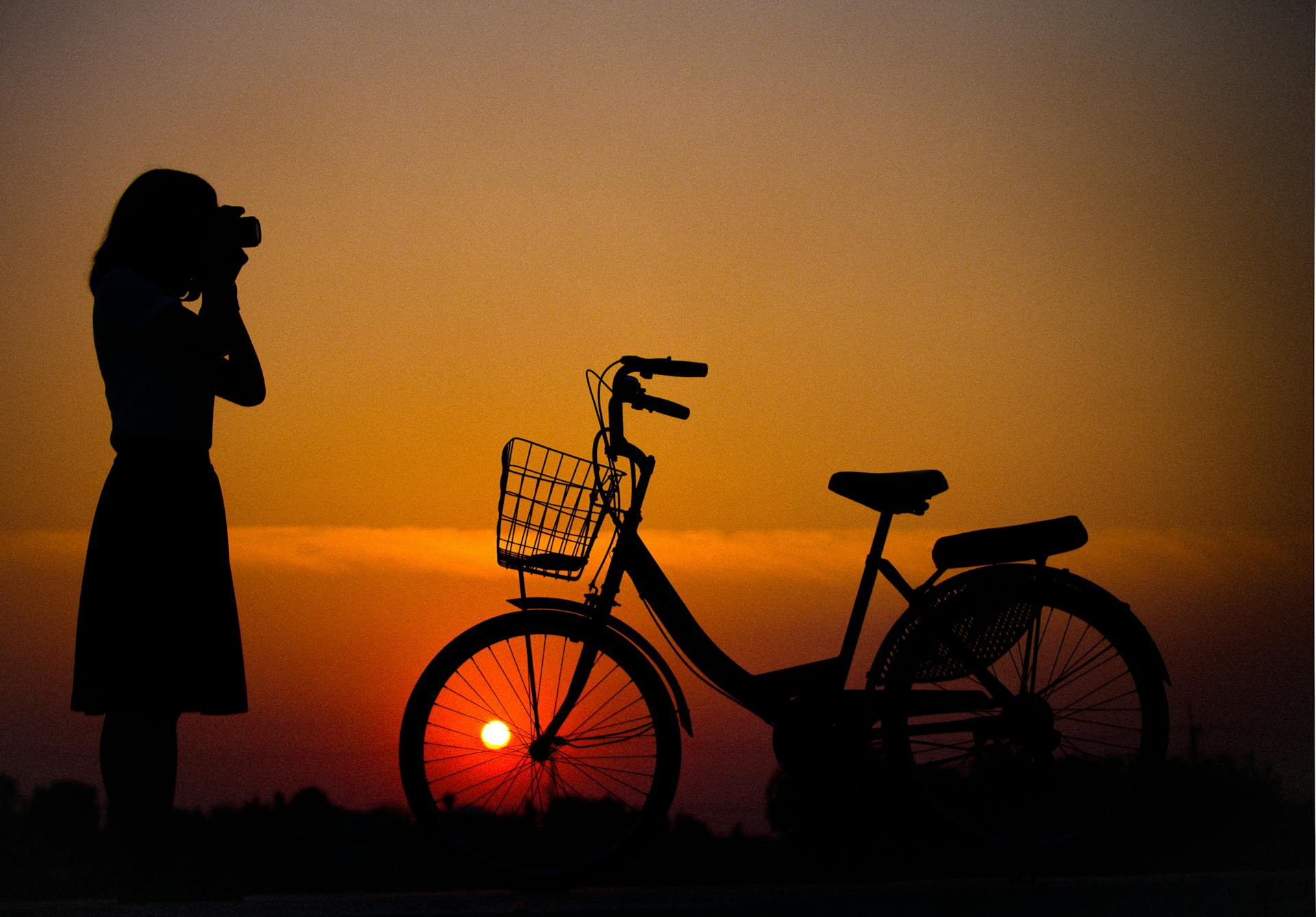
A bicycle first, because it is an object that hasn’t changed meaningfully since the 1880s and is still one of the best things a person can own.
Not for environmental reasons, though that argument exists. Not primarily for fitness, though that argument also exists. A bicycle gives you movement through a city at human speed, under your own power, with none of the friction of traffic or parking. It is one of the most mechanically efficient machines ever built. Own one regardless of whether you own a car — they’re not in competition.
A bike that handles city streets and unpaved tracks covers almost everything without requiring a large budget. The gap between a decent mid-range option and an expensive one is far smaller than the marketing suggests. The one rule: buy slightly better than you think you need to. A cheap bicycle is a bicycle that sits unused.
A car is a freedom machine. That’s its actual function, and nothing has replaced it. The ability to leave with no plan, to stop when something looks interesting, to carry things, to reach somewhere no train serves — this is not a small thing. For anyone outside a dense city, a car is a practical necessity. For anyone inside one, it remains the difference between having access to a wider world and being limited to the city’s logic. Electric, hybrid, combustion — the right choice depends entirely on where you live and how far you drive. What hasn’t changed: an empty road at the right time of day is still one of the genuinely pleasurable experiences available on this planet.
Passion objects
Everything above is infrastructure. The phone, the computer, the bicycle, the clothes — these are the material layer of a functioning life. They matter and are worth getting right, but they are not what the life is actually about.
The passion object is different. It’s the thing connected to what you actually love doing, and it earns a different kind of investment — not because it’s practical, but because it isn’t.
Sound and music are the clearest case. Good headphones — noise cancellation on a flight, in an open office, on a commute — are closer to essential than luxury. Home audio, a proper speaker setup, changes the experience of music in a way that background sound from a phone cannot. And for anyone with musical ambitions: a guitar has been the most popular instrument in the world for most of the last century, costs roughly the same adjusted for inflation as it did in 1965, and still delivers. A decent amplifier, a well-made guitar — objects that reward the time put into them in ways that almost nothing else does.
Photography, for those who care about it beyond documentation: a dedicated camera and a good lens produce a different relationship with the act of looking. Drones have opened up a perspective on the world that didn’t exist for most of human history, and the technology has become accessible enough to be genuinely usable rather than just technically impressive.
And then there are boats. A boat is perhaps the most honest passion object there is — it requires commitment, maintenance, knowledge, and a willingness to deal with the sea on its own terms rather than yours. It gives back in proportion to what you put in, which is either a warning or a recommendation depending on who you are. A small sailing boat, a modest motorboat capable of coastal cruising, even a well-kept inflatable with a reliable outboard — the size is irrelevant. What matters is the water, and the particular freedom that comes from moving across it under your own navigation. People who have boats tend to talk about them the way musicians talk about instruments. The object becomes inseparable from the experience it enables.
The category is whatever connects ownership to action, and action to something that feels genuinely yours. Skis, a surfboard, painting supplies, woodworking tools, a chess set used seriously. Spend on these without apology.
What if the money were there
People say: if I were rich, I would buy completely different things. And then you think about it.
A better car, probably. Something with more presence on that empty road, more pleasure in the driving. A boat — not a superyacht, but something seaworthy and real, capable of crossing water to somewhere new. A house with more space, better light, a garden worth being in. Better versions of the tools you already use.
The list doesn’t actually change that much. It gets better, not longer.
This is the quiet punchline of the whole exercise. The rich and the person on a regular income are, in material terms, closer than either usually admits. Both have clothes, shelter, a phone, a way of getting around, music, the things connected to what they love. One has better versions of these things, and that matters at the margins — but the category of object is the same.
What the wealthy buy that genuinely differs is time and access: the ability to move faster, stay somewhere better, arrive without friction. Those aren’t objects. They’re conditions. And they’re worth aspiring to. But they don’t change the list.
The list is short
It always was.
Clothes that fit and last. A home that functions well and feels like yours. A phone that works for everything. A screen large enough to work on. A way to move — ideally two: one under your own power, one with an engine. Sound worth listening to. The one or two objects connected to what you actually love doing.
That’s most of it. The rest is noise, and the noise is loud, and the noise is very good at its job.
The clarity comes from seeing the list clearly and recognising that you are, most likely, already on it.
Spinfinity Art covers the material and immaterial layer of a well-lived life. Category deep-dives — phones, cameras, bicycles, cars, audio, fashion — are linked throughout.