

The previous essay ended with a question: who is doing the living — the person, or the role they have become?
It was a serious question. This one is slightly less serious. Because the confusion it describes is, on closer inspection, a little absurd.
The LinkedIn problem
Open LinkedIn. Read five profiles in a row. Notice how quickly people compress themselves into occupational form: founder, visionary, builder, disruptor of industries.
There is a man somewhere who has listed “Coffee Enthusiast” in his bio. He is a barista. He makes coffee eight hours a day and apparently continues the experience in spirit afterward. One can only admire the commitment.
None of this is really his fault. From the moment someone is old enough to be asked what they want to be when they grow up, the assumption is already embedded: that the answer to who you are and what you do for money belong in the same category. They do not.
The math nobody does
There are 168 hours in a week.
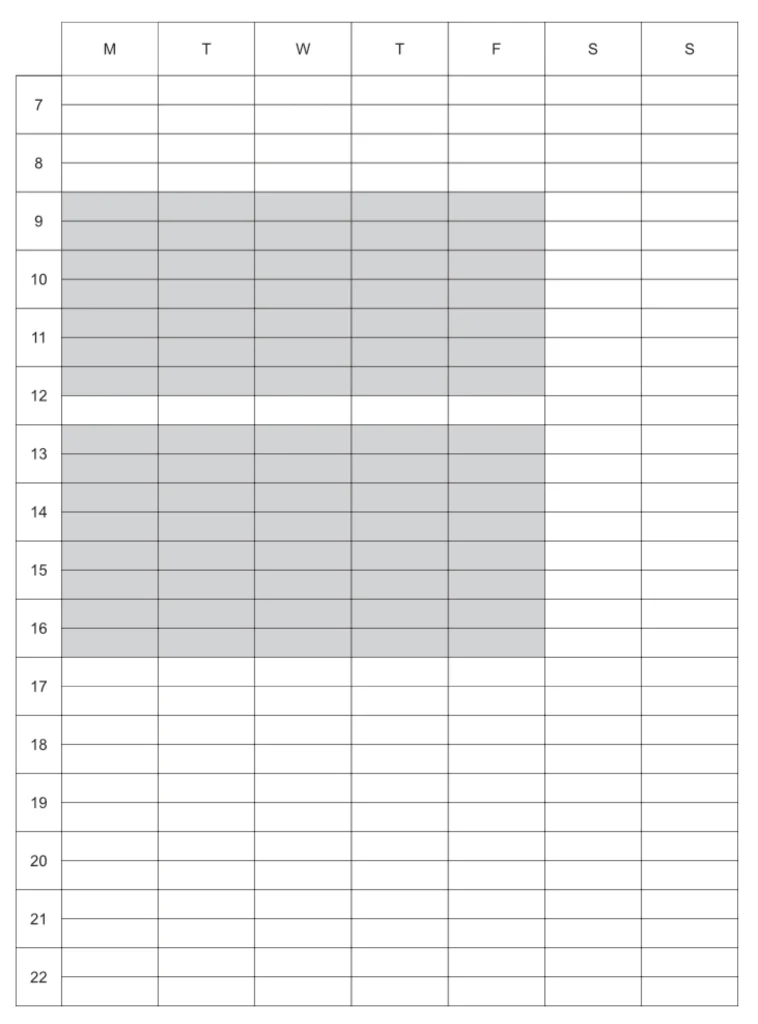
Work takes, at the outside, 40 of them. Sleep takes roughly 56. That leaves 72 hours — three full days, give or take — for everything else. Not a fragment. Nearly half of waking life, sitting there every week, waiting for instructions.
Most people spend those hours recovering from work, thinking about work, anxiously checking messages about work, or watching other people work on television. Which is a choice. Not the only one available.
A person who spends 40 hours as an accountant and the remaining time playing piano, coaching youth football, cooking elaborate weekend meals, and walking the dog at 7am without fail — in what sense, exactly, is that person an accountant? For 40 hours out of 168, yes. For the rest, something more complicated is happening.
The celebrity exemption clause
There is a category of person for whom the fusion of self and occupation seems almost defensible.
Cristiano Ronaldo. Michael Jordan. Steve Jobs. These people are frequently used as templates for what total occupational commitment looks like, and occasionally what it produces.
They are the wrong examples.
Not because they failed — obviously they did not — but because the sample size is extraordinarily small and the survivorship bias is complete. For every person who collapses their entire existence into a single pursuit and becomes historically exceptional, there are thousands who collapse their entire existence into a single pursuit and simply become tired.
Even the exceptional cases are less total than they appear. Jordan played golf. Jobs took long walks. Ronaldo has children. The obsession was the dominant mode, not the only one. And none of them would have described themselves as merely their output.
What actually fills a life
Outside occupation, there is a large amount of life that resists professional description.
Relationships — the people who would notice if you disappeared. Not because you were their colleague, but because you were you. These require less grand gesture than sustained presence: showing up, repeatedly, for the same people, without agenda.
Health — the body that carries everything else. Its returns are largely invisible when it is going well, which makes it easy to underinvest in until the investment becomes non-optional.
Creativity — things made without a functional reason. Not content, not a side hustle — just the making itself. A meal nobody asked for, a photograph taken for no audience. The only requirement is that usefulness is not the point.
Place — where you actually live, which is not just a logistical fact. The neighborhood at a specific time of morning. The walk taken enough times to stop requiring attention. These form the background against which everything else happens, and backgrounds shape experience even when they are not noticed.
Learning — anything, preferably unrelated to your field. The mind has a strong preference for stimulation that goes nowhere useful. This is not a flaw. It is how range develops.
Rest — not recovery from work, but the absence of demand. What passes for rest in most modern lives is simply the replacement of one stimulation with another. The phone instead of the laptop. The input changes; the drain does not.
Play — whatever produces genuine absorption without external pressure. Adults require permission for this, usually in the form of reframing it as something more defensible. The permission is worth granting without the reframe.
None of this is supplementary. It simply isn’t labelled — and unlike work, it has no external structure forcing attention toward it. The working hours come with deadlines, schedules, and consequences for neglect. These areas do not. They require the harder thing: structure chosen rather than received. Left unattended, the week fills with whatever is loudest, and the slow investments — relationships, health, creativity — get whatever remains, which is usually not enough.
The identity tag problem
Occupation is a useful shorthand. “What do you do?” is a faster question than “describe the full texture of your inner life and relational world.” At parties, the compressed version is practical.
The problem is when the shorthand gets accepted as a description of the person rather than a description of their current role.
Roles change. Companies fold. Industries are disrupted. People retire, burn out, change their minds. The person persists through all of it. The role is a costume — useful, sometimes well-fitting, occasionally quite expensive, but not the body underneath.
The romantic version of the same mistake
There is a more elegant form of this confusion: the idea that certain people are their work.
The artist who has decided that their occupation is not merely a thing they do but a sacred calling — a way of being — a poetic mode of existence that ordinary people could not possibly understand. This version is particularly sturdy because it adds spiritual significance to the error.
Most great artists were also people who did laundry. The distinction between work and self does not disappear under intensity. It only becomes easier to ignore.
What self-knowledge actually requires
The question is not what you do.
It is what remains when nothing is required of you. What holds your attention without reward. What you return to without instruction. What kind of person you become in the presence of people who have no idea what you do for money.
In those spaces, identity is less legible. It does not announce itself in a headline. It accumulates quietly, across unrelated activities, over a long time.
The job is one room in a larger structure.
Most people spend their lives decorating it without ever exploring the rest of the building.
You are probably more interesting than your job title suggests. This is almost certainly true. The title was never meant to capture a person — it was meant to capture a role. These are different things, and confusing them is one of the quieter ways a life gets smaller than it needed to be.
If the occupation side of this still feels unresolved — whether to stay employed, go independent, or build something on the side — Job, Business, or Something in Between? works through exactly that. And for the deeper structure underneath all of it — how work organizes identity in the first place — The Architecture of Occupation is where this conversation began.