
In Dubai, at the World Government Summit, Elon Musk sat across from an interviewer who placed him in the same sentence as Newton, Einstein, and Al-Khawarizmi (a 9th century Persian mathematician from Baghdad whose work gave us both algebra and the word algorithm). Musk accepted this gracefully.
The interviewer asked him about his life mission. Why does he do any of it?
“When I was a kid I was wondering, what’s the meaning of life? Like, why are we here? What is it all about? And I came to the conclusion that what really matters is trying to understand the right questions to ask. And the more that we can increase the scope and scale of human consciousness, the better we’re able to ask these questions.”
And then, when asked what life actually is — whether it is real, a dream, something else entirely — he said this:
“When you see the advancement of video games — 40 years ago you had Pong, two rectangles and a dot. Now you have something almost photo-realistic with millions of people playing simultaneously. If you extrapolate that out into the future, eventually those games will be indistinguishable from reality. And then it seems like — how do we know that didn’t happen already? How do we know we’re not in one of those games right now?”
He paused. The interviewer nodded.
This is the man who built the Model 3.
The brain behind the car
Elon Musk was born in Pretoria, South Africa in 1971, along with his brother Kimbal — two people from the same house who ended up on opposite ends of the same question: how do you sustain life on this planet, and eventually beyond it? Elon went vertical. Kimbal went into the soil.
Kimbal today runs restaurant chains built around locally sourced food, founded Square Roots — an urban farming company growing crops in hydroponic shipping containers in Brooklyn — and launched Big Green, a nonprofit that has built learning gardens in hundreds of schools across America. He sits on the boards of Tesla and SpaceX. His goal, stated plainly: real food for everyone on Earth, and eventually the farming technology to feed people on Mars.
Meanwhile his older brother taught himself programming at ten, moved to Canada at seventeen, dropped out of a Stanford PhD program after two days because he decided the internet was more important, and co-founded Zip2, then X.com, which became PayPal and sold to eBay for $1.5 billion. Then, instead of retiring, he spent that money on things people told him were impossible.
SpaceX, because he wanted humanity on Mars and existing rockets were too expensive. Tesla, because existing car companies were too slow. The Boring Company, because traffic is solved by tunnels not more roads. Neuralink, because the bandwidth between human brains and computers is too slow and he wants to fix it surgically. A flamethrower, because why not, and it sold out in days.
Then he bought Twitter, renamed it X, fired most of the staff, and walked into global politics with the same energy he brings to rocket landings — loud, fast, and entirely unconcerned with what anyone thinks about it.
In Dubai he was asked what advice he would give to young people who want to be like him. His answer was immediate: “I think that probably they shouldn’t want to be. It sounds better than it is. It’s not as much fun being me as you’d think.”
The car you are about to read about was built by this person. The seats are vegan leather — no animals, by design. That is also relevant information.
Tesla — a brief timeline
| Year | Model | What happened |
|---|---|---|
| 2006 | Roadster (1st gen) | Unveiled to the public. First production electric sports car. Based on Lotus Elise chassis. 245 mile range. Proved electric cars could be fast. |
| 2008 | Roadster deliveries begin | First customer deliveries. Tesla goes from concept to real product. |
| 2012 | Model S | Launch of the first Tesla sedan. Range over 400 km. Redefined what an electric car could be. Roadster production ends. |
| 2015 | Model X | Electric SUV with falcon wing doors. Built on Model S platform. Higher price, moderate sales. |
| 2017 | Model 3 (1st gen) | The affordable Tesla. Starts at $35,000. Instant bestseller. Becomes the world’s bestselling EV. |
| 2019 | Model Y | Compact SUV crossover. Shares 75% of parts with Model 3. Announced 2019, deliveries from 2020. |
| 2019 | Cybertruck unveiled | Steel exoskeleton pickup truck. Armored glass demonstration goes wrong on stage. Becomes a cultural moment regardless. |
| 2021 | Model S / Model X refresh | Major interior redesign. Yoke steering wheel replaces traditional wheel. Controversial. |
| 2023 | Cybertruck deliveries begin | Four years after unveiling. AWD and Cyberbeast trims first. Stainless steel body, up to 845 hp. |
| 2024 | Model 3 Highland refresh | Significant interior and exterior update. New rear screen. Ventilated seats. Quieter cabin. This is the generation reviewed here. |
| 2025 | Model Y Juniper refresh | Updated Model Y with revised exterior, improved interior, indicator stalks return. |
| 2026 | Model 3 Standard added | Entry level trim introduced in US and Europe. Breaks the €37,000 barrier. Four trim lineup established. |
| TBA | Roadster (2nd gen) | Announced 2017, repeatedly delayed. Promised 0–100 under 2 seconds. Still coming. |
| TBA | Cybercab | Autonomous robotaxi. No steering wheel, no pedals. Part of Musk’s self-driving vision. |
Tesla Model 3 — 2026 lineup
| Standard RWD | Premium RWD | Premium AWD | Performance AWD | |
|---|---|---|---|---|
| Price (EUR, Germany) | ~€37,970 | ~€45,970 | ~€49,000 | ~€58,000 |
| Battery (usable) | ~68 kWh | ~75 kWh | ~75 kWh | 82 kWh |
| Power | 208 hp / 154 kW | 295 hp / 218 kW | 340 hp / 250 kW | 534 hp / 393 kW |
| Torque | 340 Nm | 420 Nm | 493 Nm | 660 Nm |
| Range (WLTP) | 534 km | 602 km | 574 km | 571 km |
| 0–100 km/h | 5.8 sec | 4.9 sec | 4.2 sec | 2.9 sec |
| Top speed | 201 km/h | 201 km/h | 225 km/h | 261 km/h |
| Drive | RWD | RWD | AWD | AWD |
The Performance trim delivers 534 horsepower — more than a Porsche 911 Carrera — at a price where a Porsche doesn’t even begin. Croatian pricing typically adds 5–10% over German market prices.
The moment you press the throttle
There is a specific instant when you floor the accelerator on a Tesla Model 3 Performance and your understanding of what a car is supposed to feel like gets quietly revised. No sound. No drama. No gear change, no engine climbing through its range.
And then your body reports something your brain hasn’t processed yet. The seat finds you before you find it. Your organs, briefly, are somewhere behind you. This is not a sensation available in ordinary cars. You feel it in supercars — in things with screaming engines that warn you it’s coming, that build toward it, that charge you €200,000 for the privilege. In the Model 3 it arrives in complete silence, which makes it stranger. The violence is perfectly quiet.
A Porsche 911 that delivers similar numbers costs three times more new. A Ferrari doesn’t enter the conversation below €200,000. A used Model 3 sits at under €20,000 on the secondary market. Same organ-rearranging moment. Same silence. Same seat finding you before you find it. For the price of a mid-range family hatchback.
That is not a small thing. That is the actual disruption.
The interior confirms it — vegan leather in white, panoramic glass, a sound system that treats silence as a canvas. You understand immediately why people fall for this car. It does not convince you intellectually. It teleports you emotionally and the argument is over.
It feels like a glitch in the simulation.
Which, if Musk is right about any of this, it might be.
Then you open Google Maps
Zagreb to Dubrovnik is roughly 600 kilometers. In a combustion car it is a decision, not a calculation. You decide to go, you go.
In a Model 3, the same journey becomes a logistics operation. The official WLTP range is impressive on paper — the Performance trim claims 571 km under test conditions. Real-world motorway range is a different conversation. Unlike combustion engines, which settle into efficiency at steady highway speeds, electric motors work harder against air resistance the faster you go. The place where you most want range is exactly where the car gives you least of it.
So you stop. You find a Supercharger. You wait — not three minutes like at a petrol station, but thirty minutes minimum for a meaningful charge. You do this calculation before you leave, during the journey, and again on arrival wondering whether you have enough to get back.
To be fair: the route is doable. Superchargers exist along it. This is not a broken technology — it is a technology that works, but only if you accept that it changes the psychology of travel. Spontaneous is replaced by planned. Freedom is replaced by logistics. For some people that trade is invisible. For others it is the whole point.
Musk, in Dubai, was asked about the future of transport. He said autonomous vehicles are coming faster than people realize. He said the transition to electric will take thirty to forty years. He said the demand for electricity will probably triple as the world electrifies transport and heating simultaneously.
He is thinking at that scale. The Supercharger network is thinking at a different one.
What it actually costs
A new Model 3 in Croatia sits between €50,000 and €60,000 depending on trim and configuration. Which is why the used market becomes the more interesting proposition. That supercar acceleration — 534 horsepower, 660 Nm of torque, 0–100 in under three seconds — for under €20,000 is a genuinely serious offer. Nothing else in the history of the used car market has made this possible.
The question that kills it is the battery.
A used Tesla carries its battery history like a medical record you cannot fully read. How many fast charges? What temperatures over what years? How degraded is the pack? A battery replacement, if needed, costs a significant fraction of the car’s remaining value. The mystery is not a reason to avoid used Teslas entirely. It is a reason to know exactly what you are buying before you buy it.
Most buyers don’t.
A used combustion car is a known quantity. Mechanics everywhere understand it. Parts exist. The degradation curve is predictable. You can read it by feel, by sound, by what it does or doesn’t do under load. The battery in a used Tesla requires specialist knowledge just to evaluate. You are buying someone else’s charging habits along with their car.
The €18,000 used Model 3 with supercar acceleration is real. The uncertainty about what happens at €25,000 in battery repairs is also real.
The alien question
In Dubai, the interviewer asked Musk whether he believes in extraterrestrial intelligence. He did not dismiss the question.
“Digital super intelligence will be like an alien,” he said. “It will be like an alien arriving on Earth.”
Then the interviewer pushed further — do you think there is other intelligent life outside Earth?
“It seems probable. I think this is one of the great questions in physics and philosophy — where are the aliens? Maybe they are among us, I don’t know. Some people think I’m an alien. Not true. But maybe we are aliens. If you look at this part of the world, there are people who believe human beings are not originally from Earth. In a way, human beings are aliens to this land.”
And if super intelligent aliens already exist out there?
“If there are super intelligent aliens, they’re probably already observing us. That would seem quite likely and we’re not smart enough to realize it.”
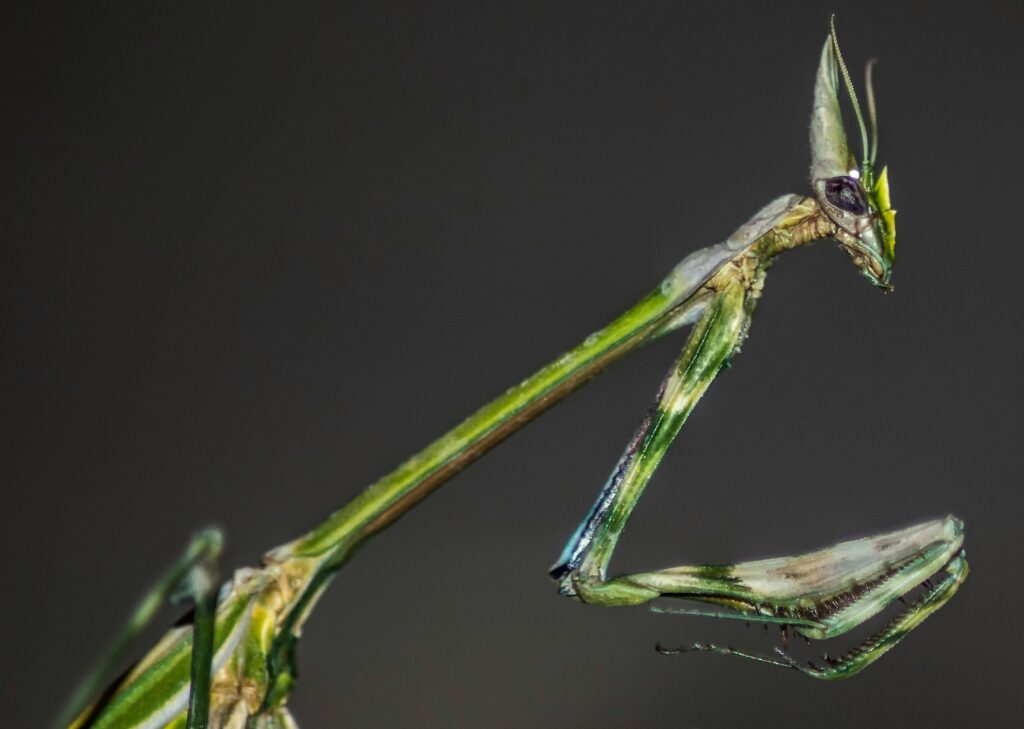
Nature, for what it’s worth, has already built the alien. The Empusa pennata — a mantis species found across southern Europe, including Croatia — has a conical head, compound eyes, and a body that looks less like an insect and more like something designed by a concept artist with no interest in earthly convention. It has been here far longer than we have. It has been watching far longer than we have.
Musk says super intelligent aliens are probably already observing us and we’re not smart enough to realize it.
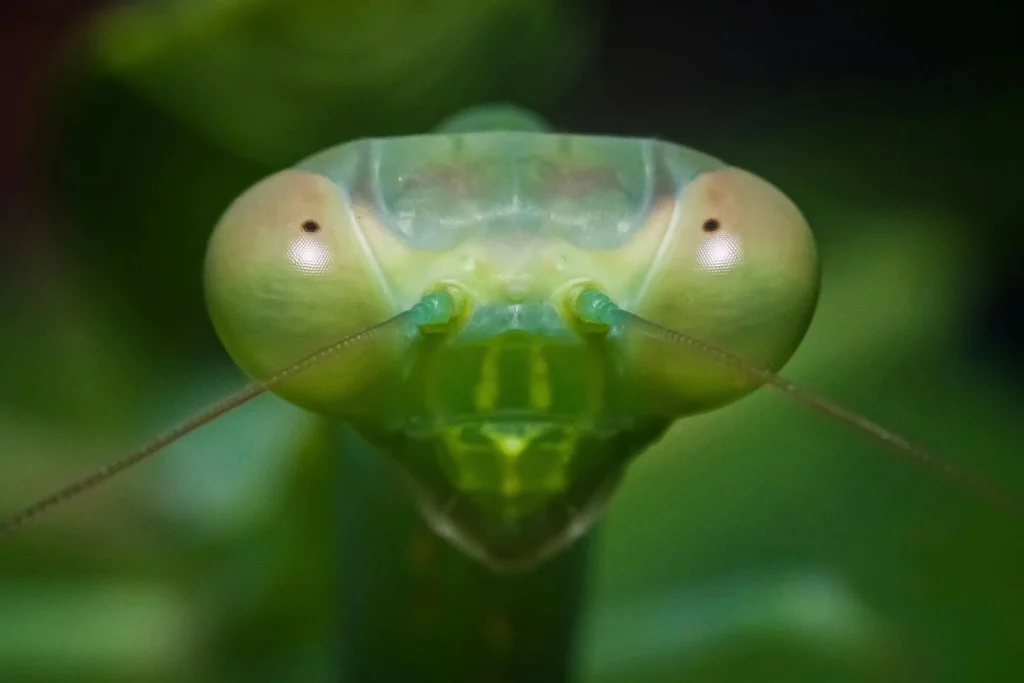
The mantis was unavailable for comment.
This is not a man performing eccentricity. This is a man who has thought seriously about these questions and answers them the same way in front of heads of state as he would in private. The simulation question, the alien question, the meaning question — he takes all of it seriously because he understands that taking it seriously is the only rational position given what we actually know.
The Model 3 is the product of that mind. It is not a car designed by people optimizing for the present. It is a car designed by someone who finds the present mildly insufficient and is already building the next thing. The teleportation feeling when you press the throttle is not accidental. It is the point. You are supposed to feel that the old world just ended.
The problem is the infrastructure is still in the old world.
The verdict: 1/0
The Tesla Model 3 is an extraordinary machine in the wrong decade for most people’s actual lives.
For the city — Zagreb daily driving, home charging, routes that never test the range — it is a 1. Possibly the best car available at any price for that specific life. Five hundred and thirty four horsepower in silence, vegan leather, a sound system that makes other car audio sound like a phone speaker, and running costs that make petrol feel like a historical mistake.
For anyone who travels — who drives to the coast, across borders, through regions where charging is sparse and time is not negotiable — it is a 0. Not because the car fails. Because the world it requires does not yet exist everywhere. Three minutes at any petrol station anywhere on the continent remains the combustion argument, and for now it wins.
Musk said in Dubai: “I think the one thing we can be quite certain of is that any predictions we make today for what the future will be like in 50 years will be wrong.” He said it with the calm of someone who has already decided to build the future anyway and let the predictions catch up later.
The Model 3 is that philosophy in metal and software. A product shipped from a future that hasn’t fully arrived yet, asking the present to meet it halfway.
Some people will. Some people already have.
The rest of us are still thinking about Dubrovnik.