
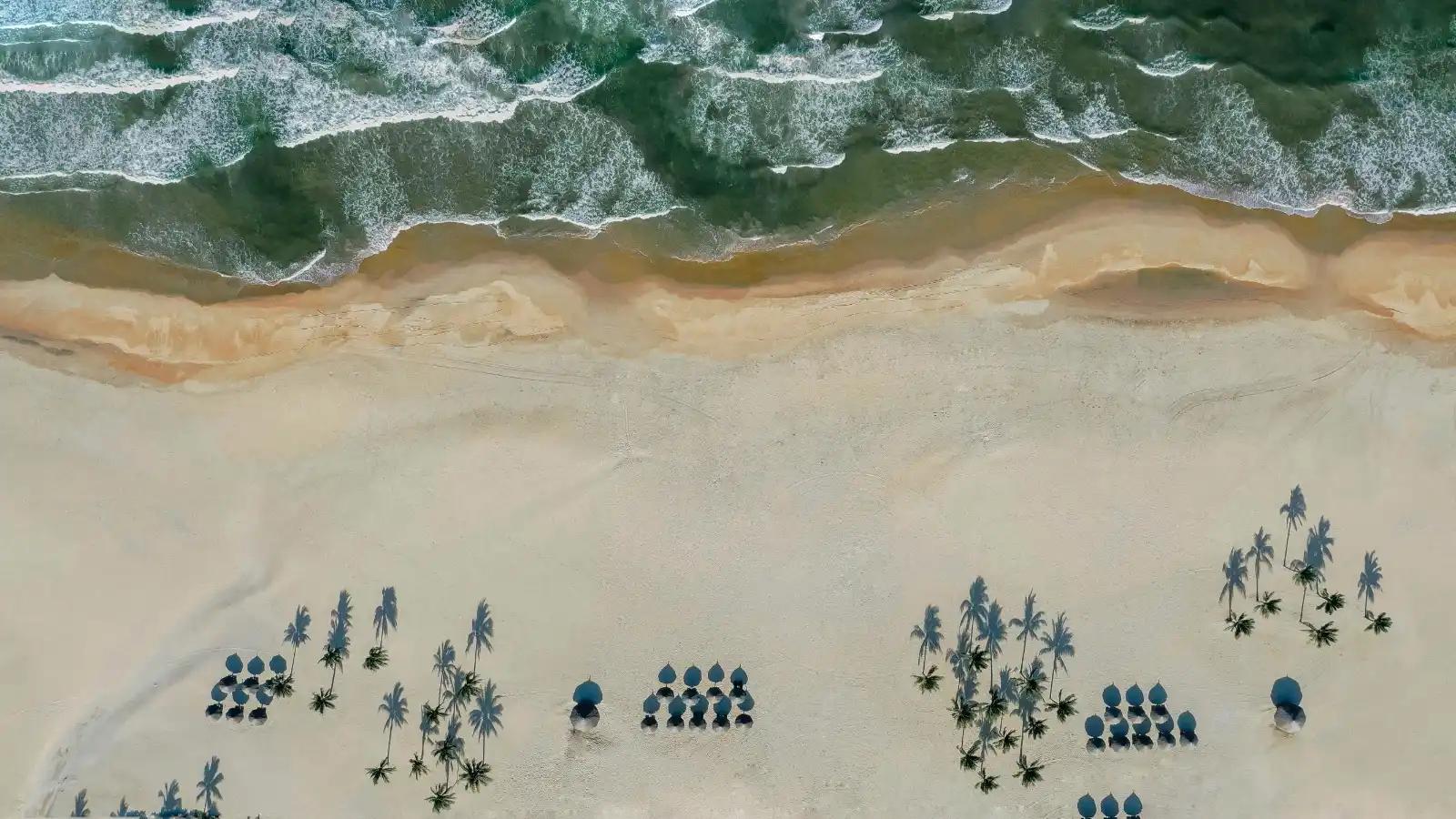
There is a strange stability to modern travel. Planes are full, airports run with near-uniform efficiency, and destinations are often known long before arrival. We move further than ever, yet encounter less that feels genuinely unknown. A city is frequently experienced twice now—first as an image, then as a visit that confirms it. Even discovery itself feels pre-framed, waiting in advance as expectation. So the question settles quietly: if the world is already visible everywhere, what exactly are we still traveling for?
The question beneath the suitcase
Travel has long been treated as a pillar of a well-lived life. Alongside work, home, and relationships, it sits as something implicitly necessary—proof that one is not only repeating a local existence, but extending it.
And yet the logic behind it is rarely examined.
Travel is expensive. It is tiring. It interrupts continuity. It turns money into experience that does not accumulate in any stable form. It produces memory, but memory is unstable capital.
At the same time, the world has become legible without movement. Places are mapped, filmed, reviewed, and ranked long before arrival. Distance has been compressed into interface.
So the question becomes simple:
Why travel at all?
The flattening of distance
A century ago, travel carried real epistemic weight. To leave home was to enter uncertainty. Geography implied opacity. Other places were not just different—they were unknown.
That condition has largely dissolved.
Today, a place appears first as information, then as expectation, then as experience. Arrival often feels like confirmation rather than discovery.
Travel is no longer the primary way of knowing the world. It is a secondary encounter with something already partially known.
What remains is not discovery—but presence.
And presence is harder to justify.
What travel still does
And yet something remains.
Travel does not primarily produce information. It produces recalibration.
Not knowledge, but a shift in how perception behaves.
It happens when familiar assumptions stop working:
- language slows
- competence becomes slightly fragile
- social cues must be actively read
- orientation is no longer automatic
Travel is not about seeing new things. It is about losing alignment with the system you normally move through.
That slight misalignment produces attention. And attention is the real substance of travel.
The clearest example of this recalibration is a specific journey — not because the destination is exceptional, but because the inherited picture I arrived with was wrong in almost every direction, and the wrongness was immediate and physical, not gradual. The picture broke before I had time to protect it. What that experience revealed about inherited maps, and about the place I came from, is examined here: What the Road to Istanbul Taught Me About Home.
The McDonald’s illusion
It is easy to assume globalization has flattened everything.
Brands repeat. Airports converge. Cities begin to resemble one another in materials, layouts, and commercial rhythm.
But this applies only to the visible layer.
Beneath it remains variation that resists standardization: informal culture, how people occupy space, how time is treated, how proximity is negotiated, how silence behaves between strangers.
These patterns are not architectural. They are behavioural.
And they remain stubbornly local.
Forest, coast, city — three modes of attention
Not all environments ask for the same kind of attention.
A city requires reading: signals, movement, timing, unspoken coordination.
A coast reduces demand. It compresses perception into horizon, repetition, and calm.
A forest does something different. It does not ask for interpretation—it demands orientation. Paths disappear. Distance becomes unstable. Reference points vanish quickly. You adjust continuously rather than rely on overview.
Different environments do not just look different. They reorganize attention itself.
The sea as default rest
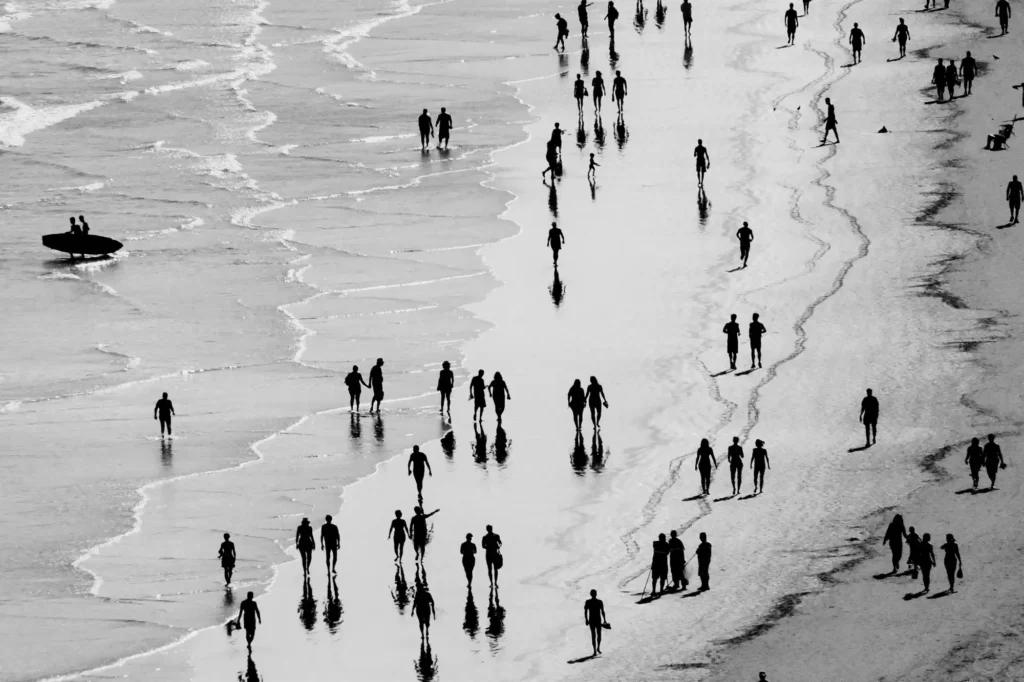
If travel is increasingly managed variation, vacations reveal its most stable form: the coast.
Beaches and seaside landscapes function as a global consensus on rest. They reduce rather than stimulate.
The sea removes structure. Horizon replaces detail. Movement slows into repetition. Cognitive load drops without effort.
Unlike forests, which demand constant orientation, or cities, which demand constant reading, the coast asks almost nothing.
It simply holds space.
That is why it has become the default image of rest: not because it is meaningful, but because it is legible everywhere.
Nautical distance
The nautical world extends this logic outward.
Where sailing is common, movement across water becomes less about separation and more about continuity. Islands sit close enough that travel feels modular rather than dramatic. Days are shaped by short crossings rather than long displacements.
Sailing becomes a way of reorganizing geography rather than escaping it.
The coastline is not replaced. It is rearranged.
Seen from the sea, the same places appear in different order, but remain themselves.
Enclosure as the new travel form
Increasingly, travel is no longer defined by exposure to place, but by entry into controlled environments.
Resorts, cruise ships, and all-inclusive systems represent a structural shift. They do not sit within destinations. They partially replace them.
Their logic is simple: reduce uncertainty, stabilize experience, remove friction.
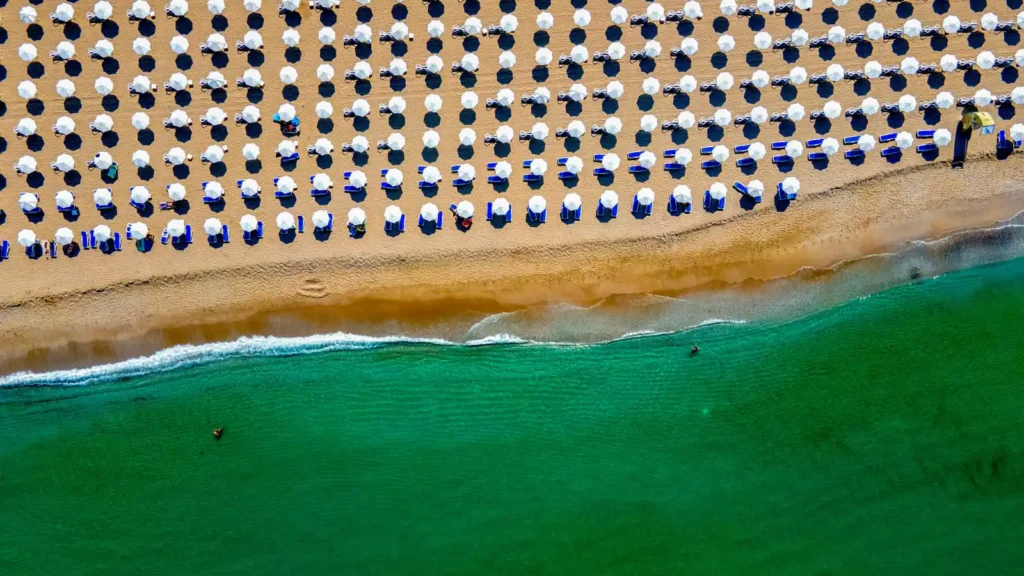
The result is enclosure.
The outside world becomes background rather than context. Culture is softened, interaction pre-shaped, and time organized in advance.
What remains is coherence. What is reduced is unpredictability.
Resorts, cruises, and managed movement
A resort is not fully inside a country. It is adjacent to it.
It borrows climate and landscape while filtering complexity. It produces a parallel geography where the external world is visible but not operational.
Time is structured around repetition: meals, pools, excursions. A closed loop of consumption and rest.
Cruises extend the same logic in motion. You wake in a new place without undergoing the transition into it. Ports become brief interruptions in continuity. The ship becomes the primary world; destinations become secondary.
Mobility is preserved. Friction is removed.
Airbnb and simulated domesticity
Platforms like Airbnb introduced proximity to “local life”: apartments, neighbourhoods, domestic space.
In practice, it produces something more ambiguous.
The traveler occupies residential space without participating in its continuity. One is inside a city, but not inside its rhythm.
What results is simulated domesticity—familiar form, temporary presence.
Couchsurfing and the return of structure
Couchsurfing once attempted to remove transaction entirely.
At its best, it created direct contact with everyday life—shared meals, informal hospitality, unscripted interaction.
But openness introduces instability. Trust becomes central. Expectation becomes central.
Structure returns: verification, ratings, norms.
The cycle repeats. Openness creates friction. Friction creates systems. Systems create predictability. Predictability rebuilds enclosure.
The planetary default checklist
Certain cities now function as compressed emotional symbols:
Paris as romance
Amsterdam as permissiveness
Prague as accessible history
New York as intensity
Tokyo as precision
Bali as slowed escape
These are not false descriptions. They are reductions—portable narratives that travel more easily than the places themselves.
Modern tourism increasingly operates through them.
We do not visit places. We confirm expectations.
These reductions are compressions — the checklist exists because the places, to some degree, confirm it. What gets lost in the compression is everything that doesn’t fit the label. What it looks like to move through these cities with the checklist running, and what breaks through it anyway: Under the Cathedral — The European Classics.
Why we still go
And yet none of this removes the basic pull of travel.
To feel air that is not familiar air. To stand near water or trees and notice a subtle shift in perception. To walk through unfamiliar streets with others and let routine loosen slightly. Not as transformation, but as atmosphere.
Travel, in lived form, is often less about discovery than a temporary loosening of structure.
We are no longer in the age of exploration. The world is mapped, documented, and continuously visible. And we prefer it that way.
In effect, the planet now resembles a field of controlled conditions—air, light, climate, culture—variation unfolding inside a fully known frame.
Yet within that frame, experience remains real. The sea still smells of salt. Forest air still feels different in the lungs. Cities still shift mood from street to street.
And that is enough more often than it should be.
Not escape from the world—but re-entry into it.
A quiet case for Croatia
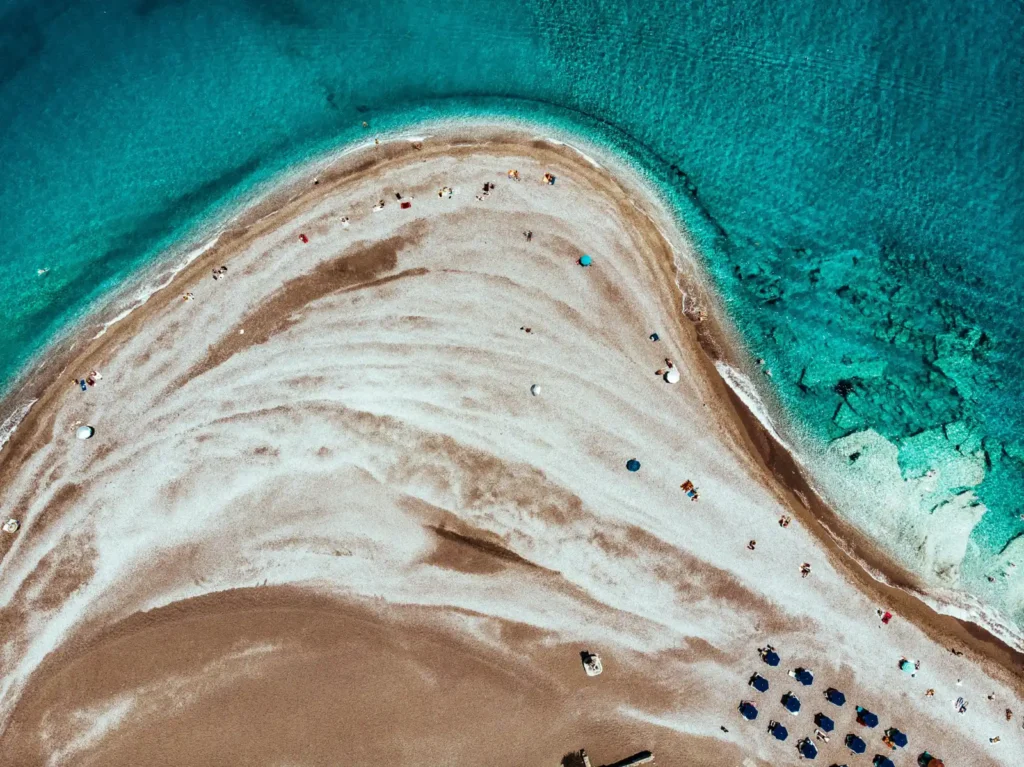
Croatia appears in this text for a simple reason: I live here. It is not used as symbol or exception, but as proximity. Writing about travel without acknowledging where you stand tends to flatten observation into abstraction. This is simply the nearest surface of reality available to look from.
The Adriatic coast is a clear example of the broader condition described above. Water, stone, light, and heat do not require interpretation, yet they still affect attention the moment you are inside them. The clarity is not symbolic; it is practical.
Move inland and the structure shifts without announcement. The coast disappears, then returns again later, not as event but as geography doing what geography does. Nothing is framed as a highlight, yet perception keeps adjusting because the environment keeps changing.
Croatia also sits within one of Europe’s most accessible sailing regions. Islands are close enough that movement across water feels continuous rather than episodic. Sailing becomes less about leaving land and more about linking it differently. Seen from the sea, the same places appear in a different order without changing their character.
In that sense, Croatia is not included as a destination, but as an example of something more general: travel today is rarely about encountering the unknown in its old sense. It is about moving through variations that remain real even when they are no longer mysterious.
Closing: travel as infrastructure
Travel is often treated as leisure. Something added to life when time and money allow.
But it functions structurally.
Alongside work, rest, home, and relationships, it shapes how experience is periodically reset. It interrupts continuity just enough to prevent life from becoming fully sealed into repetition. It reintroduces friction into systems that otherwise become too smooth.
It also does something quieter: it turns abstraction into contact. Cities become streets. Cultures become situations. The world stops being information and becomes immediate again.
In that sense, travel is not decoration.
It is one of the mechanisms through which lived experience stays readable, varied, and real.
It should be thought of as infrastructure—one of the quiet pillars of how human life maintains depth.
And perhaps that is its most durable justification.
We travel not because the world is unknown, but because experience itself still benefits from being re-entered from elsewhere.

Before the destination
Most travel planning begins in the wrong place.
Before the destination, before the budget, before the dates, there is a prior question that rarely gets asked:
What is this trip actually for?
Not what photographs well. Not what other people recommended. Not what fits the available week in August. But what the current structure of life genuinely requires.
Because travel is not one thing.
Rest is not the same as recalibration. Novelty is not the same as connection. Escape is not the same as re-entry. Each points toward a different kind of movement, and treating them as interchangeable is where much travel disappointment quietly begins.
Some trips are attempts at decompression. The goal is reduction: fewer decisions, fewer demands, lower cognitive load. The coast exists partly for this reason. So do resorts, islands, and places that ask almost nothing from you. There is no need to disguise this as discovery. Rest is a legitimate objective.
Other trips are attempts at recalibration. These require mild friction. A different language. An unfamiliar rhythm. Situations where automatic assumptions stop functioning for a while. Comfort works against this entirely.
Then there is connection. Shared travel changes character depending on who accompanies it. In many cases, the destination becomes secondary. What matters is what temporary displacement does to the relationship itself. Routine disappears, and attention returns.
And sometimes the motivation is simpler than all of these.
Life has become too visually and psychologically familiar, and the mind wants new input. Different weather. Different streets. Different air. Novelty may be the least intellectually respected reason to travel, yet it remains one of the most honest.
Knowing which of these you are actually looking for changes everything that follows: where you should go, how long you should stay, what kind of place you should choose, and whether the trip succeeds on its own terms.
There is also an uncomfortable possibility worth admitting.
Not every phase of life benefits from movement.
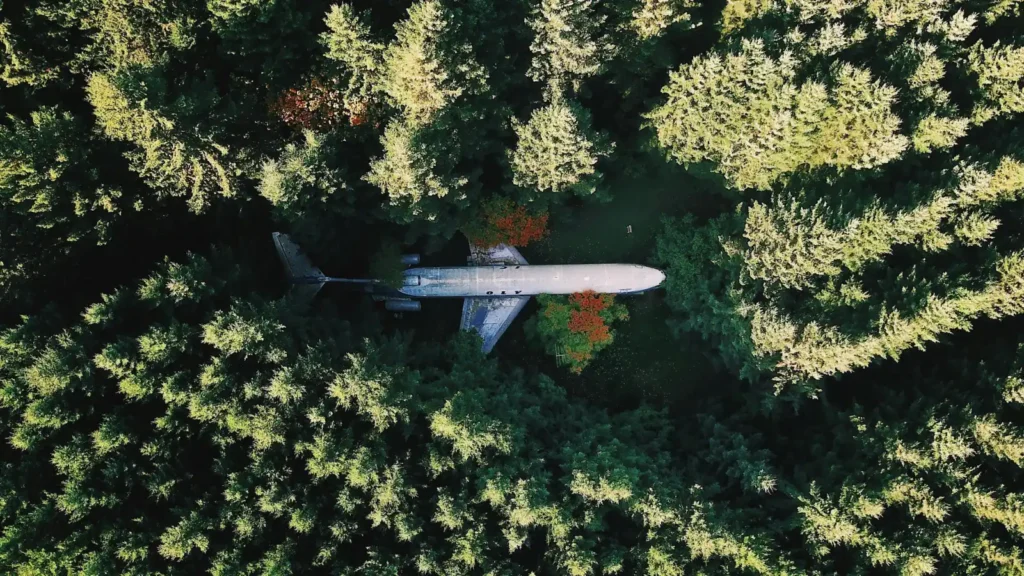
Some periods require continuity rather than interruption. Some demand investment in the local: work, relationships, neighborhood, routine, long-term construction. Travel can become a way of avoiding accumulation—the slow building of things that only happens when one remains in place long enough.
This is not an argument against travel. It is an argument against reflexive travel.
Because the question is not simply whether to go somewhere.
It is whether travel is genuinely needed, or whether travel has become the most socially acceptable form of escape available.
Two pieces that move from the framework above into lived experience — one following a bus to Istanbul, one moving through the European capitals that most people from this part of the world eventually visit. Both are about what actually happens when the picture meets the place: What the Road to Istanbul Taught Me About Home and Under the Cathedral — The European Classics.